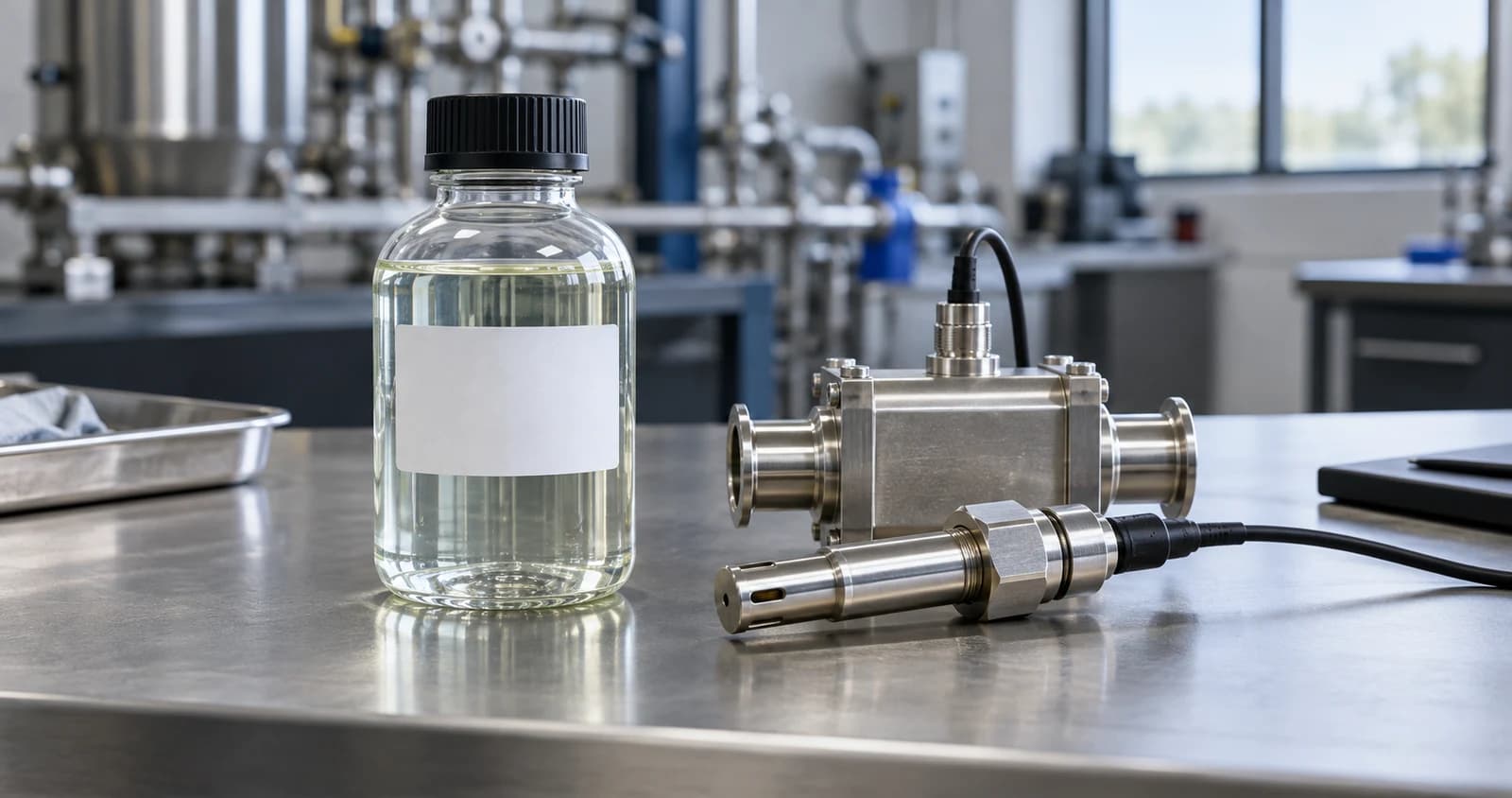
The coolant dashboard looks normal. The laboratory report does not. Before changing a calibration or ordering a fluid replacement, there is a simpler question to answer: are you comparing the same thing?
A sensor describes the fluid at its measuring point. A laboratory result describes the sample that reached the laboratory, tested by a particular method. Those two views can be useful without being directly interchangeable.
The quickest way forward is to pair the records, identify the first mismatch and plan a check that resolves it. Here is how to do that without turning the exercise into a debate about which instrument to trust.
If an alarm or fluid limit requires action, follow the site's response immediately. Reconciling the readings must not delay that response.
Start with the reading taken when the sample was drawn
A report arriving on Friday may describe fluid collected on Monday. Comparing it with Friday's dashboard quietly inserts four days of operation into the comparison.
Find the sensor record for the collection time. Note the sample port and the sensor location too. If they are on different branches, or separated by a reservoir, the fluid may have a different history at each point. Allow for transport and mixing using what is known about the actual circuit, not a universal waiting period.
Then check the event log. A top-up, additive dose, filter change or operating change may explain why the current reading differs from the earlier sample. It is a possibility to investigate, not a diagnosis by itself.
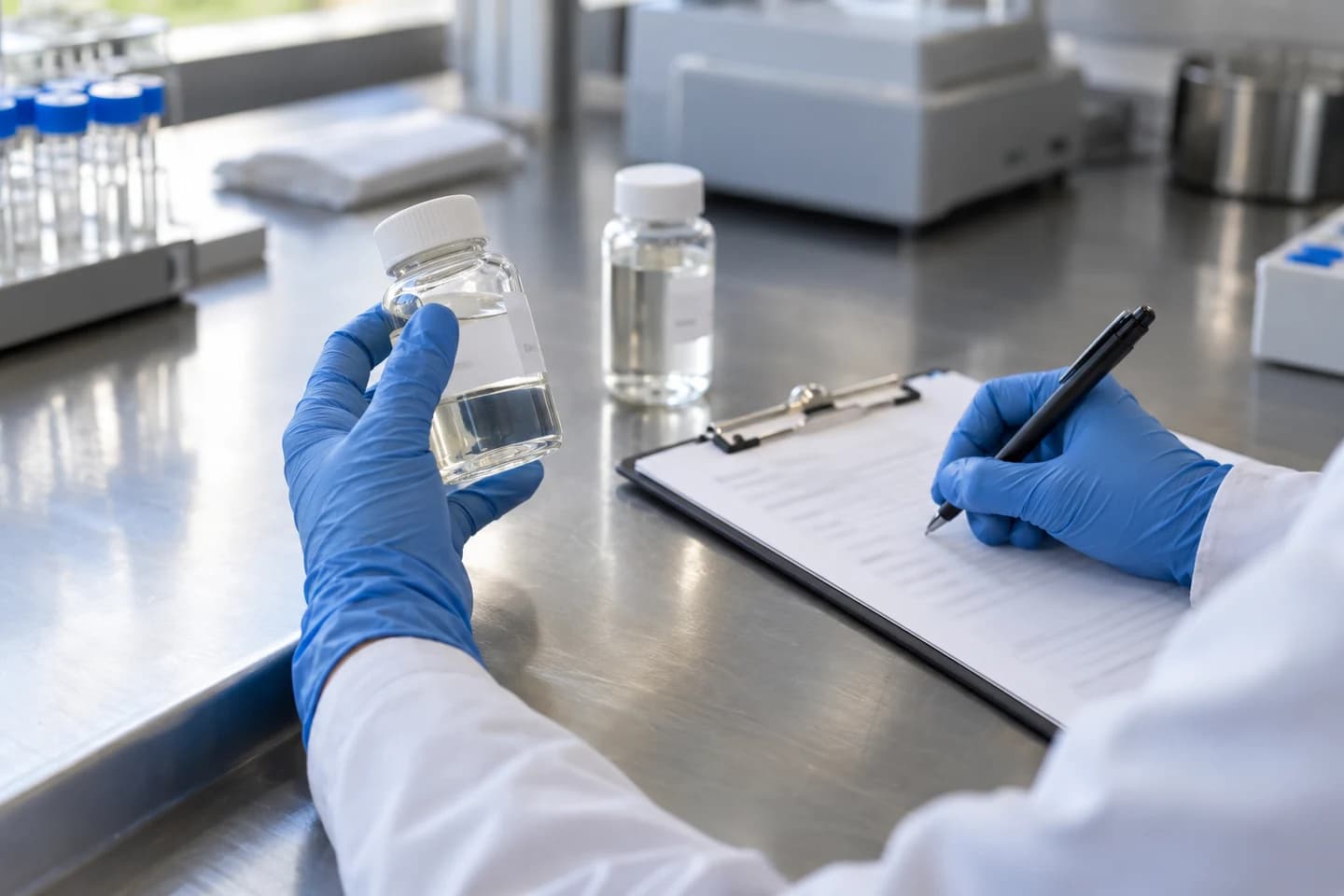
Check what each number actually means
Two matching labels can hide different measurements. Before comparing values, establish three things:
- Property: is the instrument measuring the property directly, or estimating it from another signal?
- Basis: do both results use the same units, concentration basis, temperature and sample preparation?
- Method: is each method suitable for this fluid, with its additives and operating range?
For example, a concentration displayed by a sensor may be calculated from a physical property using a product-specific relationship. A laboratory method may use a different relationship. Ask for those details before treating the two displayed percentages as equivalent.
pH needs particular care. Automatic temperature compensation corrects the electrode's response; it does not generally turn a hot fluid's pH into the pH that the same fluid would have when cold. Record the temperature with both results, and check whether a separate process-temperature correction is enabled. Electrical conductivity also needs its reference temperature and compensation settings recorded. A setting intended for one solution is not automatically appropriate for another.
These are measurement questions. They do not establish a universal acceptable pH, conductivity or glycol concentration for a cooling loop.
Preserve the evidence before adjusting anything
An unexplained difference is a reason to investigate calibration, not a reason to force the sensor to match the laboratory value.
Keep the original readings and settings. Where the instrument procedure permits, record an as-found check against the appropriate reference before cleaning, adjustment or calibration. Also note fouling, bubbles, sensor flow and any changes made during the check. Follow the manufacturer's procedure and the site's access rules.
Ask the laboratory about collection and receipt times, sample preparation, test temperature, method and quality-control information. Ask whether its stated measurement uncertainty covers only the analysis or also the sampling. The sensor's stated accuracy must likewise be relevant to the fluid and range being used.
The metrology principle is straightforward: the significance of a difference depends on the uncertainty of that difference. A small numerical gap is not automatically meaningful, and agreement is not proof that both measurements are correct. Shared errors and different measurement conditions still need attention.
A paired check is more useful than another isolated number
Consider this illustrative situation. A laboratory report shows higher conductivity than the current sensor reading. The sample was collected before a recent top-up. Nobody recorded the sensor value at collection, and the report does not state its reference temperature.
There is not enough information to call either result wrong. Nor is there enough to blame the top-up.
The next check should close those gaps:
- Confirm the fluid identity, the two methods and their measurement basis with the instrument supplier and laboratory.
- Use an approved sampling point representative of the sensor's fluid, recording location, collection time, sensor values and fluid temperature together.
- Use the laboratory's container, filling, handling and transport instructions. Do not invent a holding time or assume one bottle is suitable for every requested test.
- Ask for a report that states the information needed for comparison, including any dilution, test temperature and applicable uncertainty.
- Compare the paired results, then agree the next action with the responsible engineer. If they still differ, use the calibration and handling records to narrow the investigation.
This example supplies no acceptance limits or invented test values. Its useful output is a better comparison, not a premature fluid-condition verdict.
Agreement still has limits
Once the readings are comparable, interpret them within the fluid's wider test programme. A normal pH reading alone is not a verdict on inhibitor condition or remaining service life. Conductivity does not identify a contaminant on its own. The applicable fluid and equipment guidance determines which additional checks are needed.
Continuous observations are especially useful for locating a change in time. Targeted laboratory work can answer different questions about the fluid. Neither should be asked to provide evidence its method does not support.
Reliability Engine's Virtual Chemist describes bringing side-stream chemistry signals together with loop and GPU operating context. The useful connection is the operating history around a fluid reading. It does not remove the need to match methods before comparing numbers.
For comparisons between two laboratory metal results, see A Rising Metal Result Is Not Yet a Corrosion Diagnosis. The principle is the same: establish what changed in the measurement and the machine before deciding what changed in the fluid.
The next time the dashboard and laboratory disagree, keep both records. Match the sample to its moment in the loop. The most useful answer may begin with the missing context between them.
References and technical basis
- JCGM International Vocabulary of Metrology
Entries 2.3 and 2.47: defining the measured quantity and assessing compatibility.
- USGS National Field Manual: pH
Measurement temperature, calibration and sample handling. Written for water, not a source of coolant acceptance limits.
- USGS National Field Manual: Specific Conductance
Temperature basis, calibration and limitations for natural waters.
- Yokogawa FLXA202/FLXA21 pH/ORP operation manual
Instrument-specific temperature compensation and calibration guidance.
- ASTM D1287-25: pH of Engine Coolants and Antirusts
Public scope and interpretation limits. Engine-coolant scope is not approval for a particular data-centre fluid.
Use the fluid supplier's requirements, equipment guidance, laboratory instructions and site procedures for the actual system. This article does not establish test availability, accreditation or an operating limit. The paired-check sequence is an editorial investigation aid.
Related-site note: VeriFluid's liquid-cooling training is offered through Reliability Engine. The product reference above does not claim an integration with laboratory testing.