Liquid Cooling Operations Fundamentals
Map the FWS, CDU, TCS, rack and responsibility boundary.
Coolant and oil testing for liquid-cooled data centers.
Faster starts
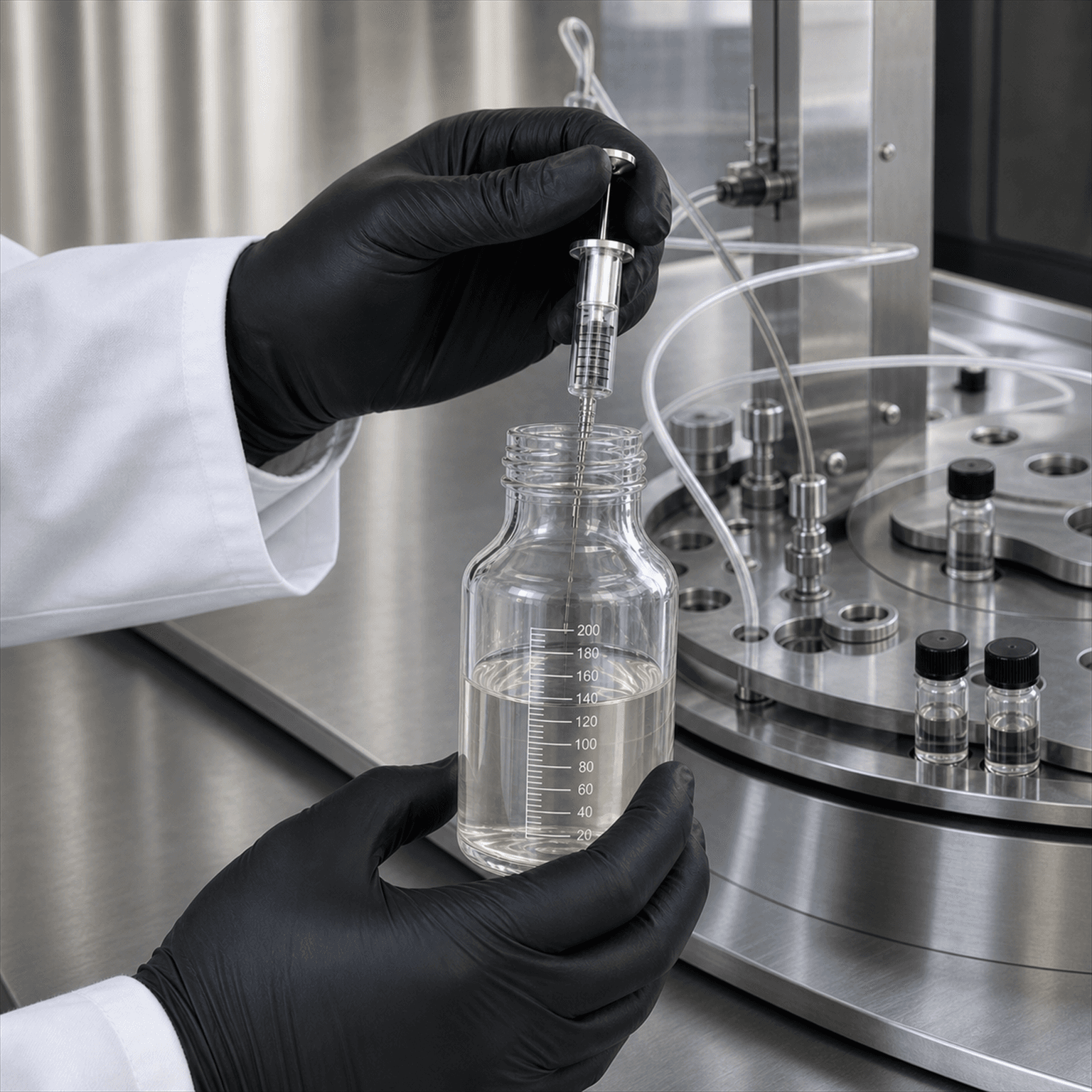
Scope the work before the bottle moves, so time is not lost deciding methods after arrival. We confirm the tests, sample requirements, receiving details and quoted timing before collection.
A result is useful only when it stays connected to the fluid, asset, sample point, operating state and baseline.
See how we protect qualityName the fluid, asset, sample point and question that needs an answer.
Use the agreed container, volume and collection instructions.
Apply methods and quality checks suited to the actual fluid.
Compare the results with baselines, history and operating context.
Make the finding, uncertainty and recommended next step clear.
Four fluid systems, one brief
Coordinate cooling, power and mechanical samples without forcing different fluids into the same test panel or acceptance limits.
Concentration, chemistry, contamination, metals and thermal properties for liquid cooling loops.
ASTM D3321 · D1287 · D5827 · D6130Review testsViscosity, density, acidity, dielectric condition and water analysis matched to the fluid.
ASTM D7042 · D4052 · D664 · IEC 60156Review testsDissolved gases, water, acidity and dielectric condition for critical electrical assets.
IEC 60475 · IEC 60567 · IEC 60156Review testsViscosity, wear metals, oxidation and contamination for standby and rotating equipment.
ASTM D445 · D5185 · D6304 · D664Review tests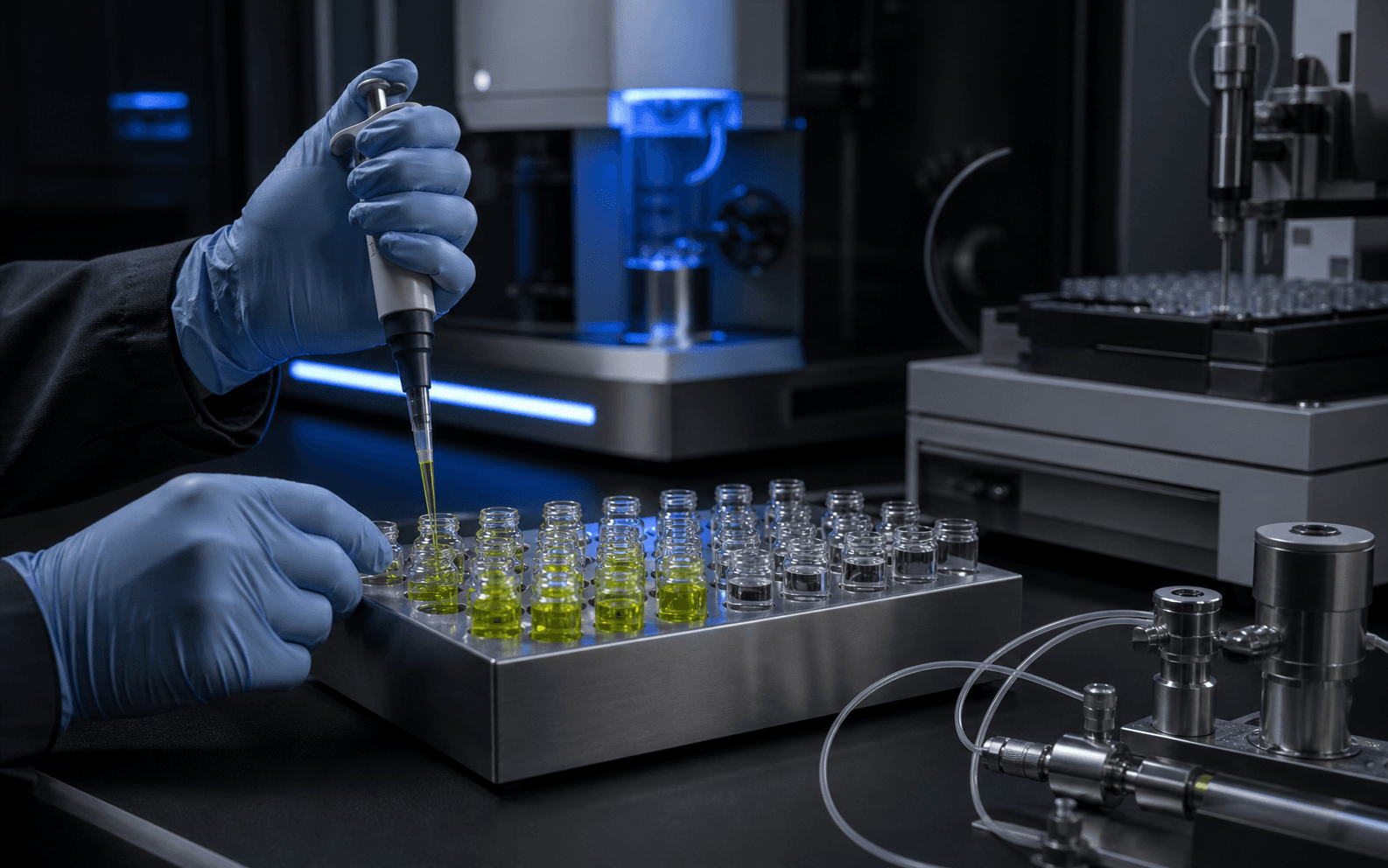
A better model for fluid testing
Faster service starts with fewer manual handoffs. Our direction is AI assistance that helps chemists organize evidence, compare history and focus their review. Laboratory results should connect with available operating and sensor context, with a human reviewer accountable for the interpretation and next step.
PG25 technical focus
A useful PG25 assessment begins with the exact product, concentration basis, inhibitor chemistry, wetted materials and applicable OEM limits. Only then can chemistry, contamination and metals be interpreted together.
Explore PG25 testingD3321 / E1252D1287 / D1121 / validated assayD5827 / validated routeD6130Method confirmed by fluidMethod applicability and acceptance criteria are confirmed for the named fluid and system. Generic limits are not substituted for product or manufacturer guidance.
Liquid cooling training in Asia
Practical training in coolant management, CDU commissioning and secondary-loop reliability, delivered through Reliability Engine for teams across Asia.
Explore trainingMap the FWS, CDU, TCS, rack and responsibility boundary.
Build baselines, collect representative samples and set clear review triggers.
Connect cleanliness, filling, filtration and handover evidence.
For multi-site teams
Common identities, comparable units, defined method routing and clear exception handling across facilities, countries and operating teams.
Structured briefs, collection context and traceable identity.
Raw results remain distinct from normalized values and interpretation.
Software organizes signals; a human reviewer owns the interpretation.
Technical resources
Start with the operating question
Tell us what you need tested. We will confirm the recommended tests, collection instructions and expected timing before you send the sample.