VeriFluid Coolant Care Network
Global coolant testing for every stage of the loop.
Commissioning a new loop or checking one in service? VeriFluid tests physical coolant samples and explains the findings against your fluid, your handover criteria and your loop history. Start with the decision you need to make.
See how we interpret a sample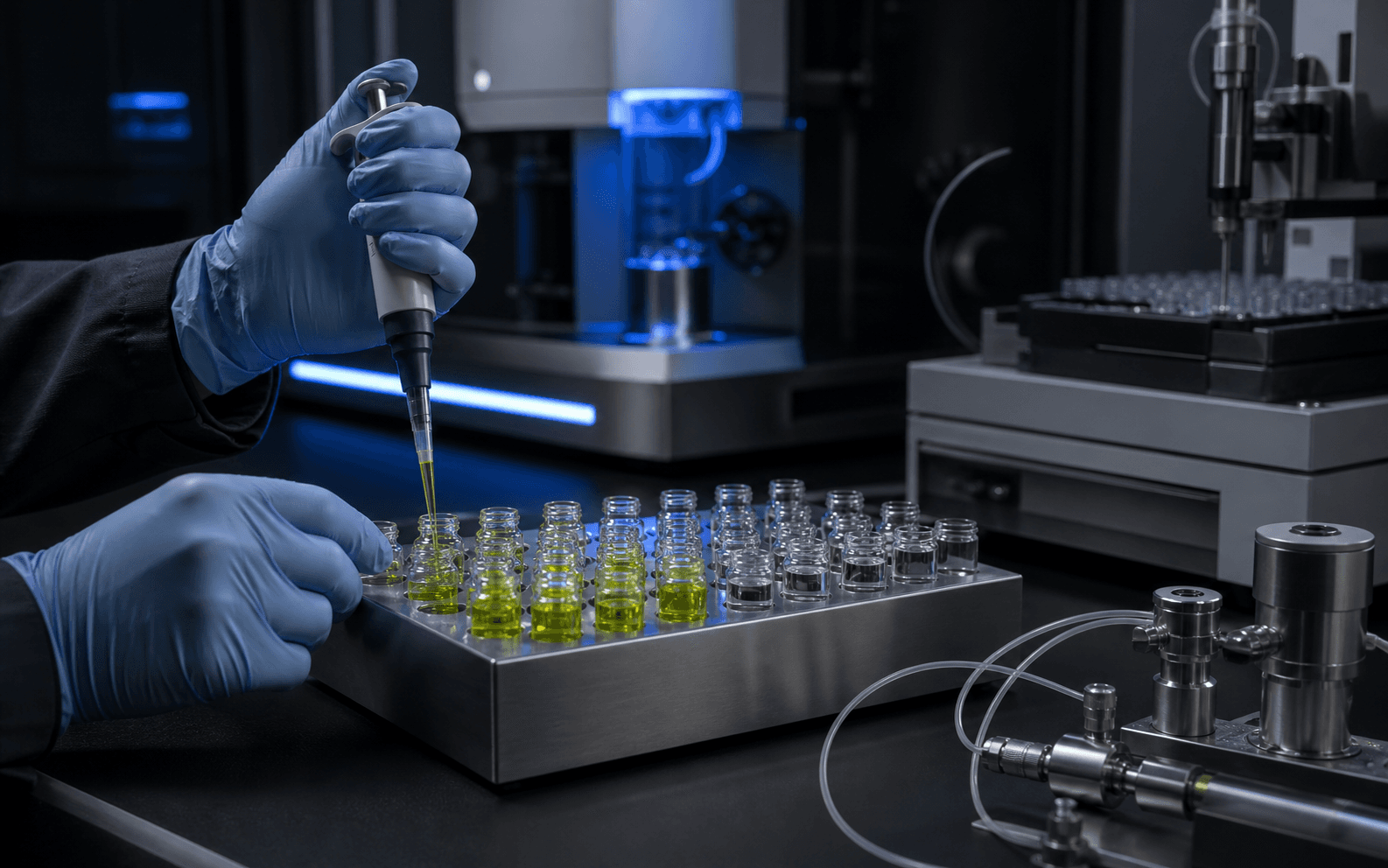
Choose your starting point
What brings you to the lab?
Choose why you’re testing. Your choice stays with your PG25 brief.
- Before handoverCommissioning baselineRecord new-fluid or post-fill condition for the project review and future comparison.Build a commissioning brief
- During operationRoutine or annual testingCompare an operating sample with the baseline and earlier results at an annual or other agreed interval.Build a routine testing brief
- When something changesInvestigationStart with an unexpected result, refill, repair, appearance change or contamination concern.Build an investigation brief
Global laboratory access
Find a coolant testing lab for your site.
Tell us where the loop is. We confirm the receiving laboratory and shipping instructions before you collect a sample.
- What to send us
- Your city and country, coolant name if known, and what prompted the test. If handover is approaching, include the review date.
- What you get back
- The lab and methods for your fluid, the bottle and volume required, collection or shipping arrangements, and expected report timing.

Loop-context reporting
A report interpreted for your loop.
A commissioning team needs to know how a fill compares with the project criteria. An operator needs to know what changed since the last sample. Your report separates measured results, interpretation, limitations and the next check.
Send the previous report and a note about any top-ups or maintenance, if you have them. Without a comparable baseline, we say what the current sample can and cannot tell us.
How we review laboratory evidenceDid the top-up change the mixture?
- Sample record
- In this example, both samples come from the same PG25 loop. The site log records a top-up between collections.
- Comparison
- The reported glycol concentrations differ. First check that both reports use the same concentration basis and samples came from the same point.
- Interpretation
- The timing makes the top-up worth investigating. The two results alone cannot identify what was added.
Next check: Ask for the top-up product and volume before treating the difference as a trend.
How we take a physical sample from site to report
Set the testing objective
Name the coolant, loop, project stage and decision the report needs to support.
Confirm the sample plan
Agree the sample point, container, volume, identification and collection timing.
Confirm the lab route
Name the receiving laboratory, method scope, transport requirements and expected timing.
Collect and identify
Create a physical sample record that stays connected to its loop and operating context.
Test the physical sample
Perform the agreed laboratory work with fluid-specific methods and documented quality controls.
Interpret and report
Connect the findings to the loop history, explain the limitations and identify the next questions.
Can you arrange testing across several countries?
We can plan testing across Asia Pacific, Europe, the Middle East and Africa, North America and Latin America. Laboratory analysis and local services may be delivered through partners. The receiving location, method scope, applicable quality status and expected timing are confirmed for each site. Not every test is available locally in every country.
Coolant testing questions
What to know before a sample moves.
Have a different question? We are happy to help.
Talk to our teamWhat is the VeriFluid Coolant Care Network?
VeriFluid's global service for commissioning, annual and other periodic coolant testing, and investigations. One programme covers physical-sample planning, collection and shipping arrangements, laboratory analysis, human-reviewed interpretation and follow-up support.
Where can you support us?
Tell us the country and city of each site, the coolant and the testing need. We will confirm the receiving laboratory, local service arrangements, shipping requirements, method scope and expected timing before collection. Not every test is performed locally in every country.
Who can use the network?
Data center owners and operators, AI infrastructure teams, mechanical contractors, service companies, water-management companies, equipment manufacturers and other organisations managing critical fluids can enquire. You do not need to know which tests to request.
Who can join as a partner?
Independent laboratories, sampling and field-service providers, mechanical and maintenance companies, water-management specialists, equipment manufacturers and data center organisations are welcome to apply. We discuss the role that fits your organisation. Laboratory and service-provider participation is subject to a review of relevant capability, quality scope and delivery arrangements.
Who performs the laboratory testing?
The receiving laboratory is confirmed for each request. VeriFluid provides the programme and keeps the sample identity, testing scope, laboratory findings and report context connected. The receiving location, method scope and applicable quality status are named before collection.
Can you manage sampling and shipping for us?
Yes. Your programme can include sampling kits, on-site collection and sample transport. The arrangements depend on site access, fluid classification and local shipping requirements, and are agreed before collection.
How often should we take samples?
Annual testing is a common programme option, not a universal interval. The schedule should reflect the named fluid, supplier and equipment guidance, commissioning stage, site risk, operating conditions and previous results. Share your current frequency, or choose Not sure yet in the enquiry form.
How quickly will we get results?
We agree the testing scope, receiving route and expected turnaround before samples are collected. Timing depends on the tests, sample location and transport requirements. If commissioning or an operating issue makes the work urgent, tell us at the start so we can assess priority.
Which fluids can the network support?
The Coolant Care Network focuses on PG25 and other water-glycol coolants used in data center cooling loops. VeriFluid also provides separate testing programmes for single-phase immersion fluids, transformer oils, and lubricants used in generators, chillers and compressors.
Is the VeriFluid Coolant Care Network part of Dow's Coolant Care Network?
No. VeriFluid is independent and does not claim Dow network approval or affiliation. We confirm testing against the named fluid, relevant manufacturer guidance and the applicable laboratory scope.